by Geoff Gouveia
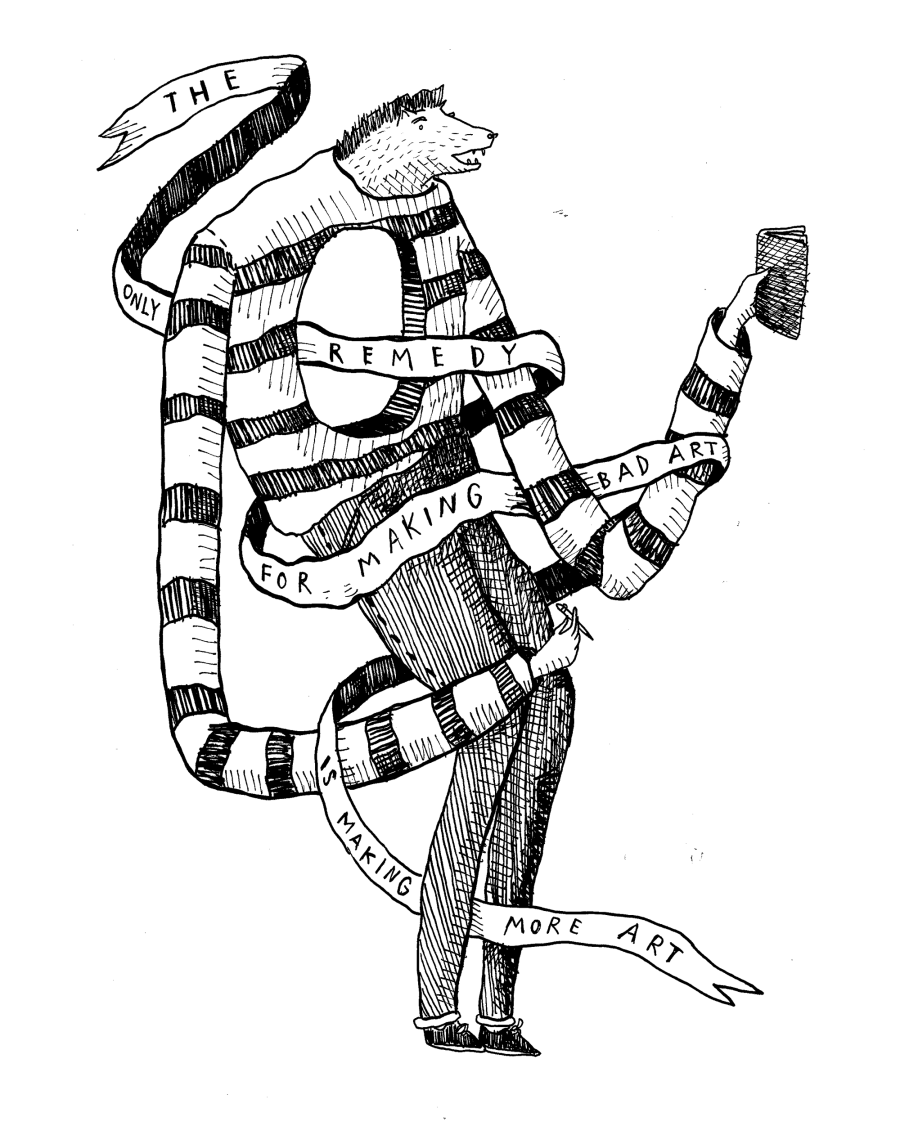
illustration by Geoff Gouveia
In the 2008-2009 school year (my senior year in high school) I was in AP art class. AP meaning advanced placement or more accurately, Geoff Gouveia should probably not be in this class. I was terrible at art and the only reason she, Mrs. Anthony, let me in was because I finished assignments quickly. I also happened to be student number 15, or the beating heart that met the minimum requirement to keep the class available for the truly gifted.
Within the first week I noticed how out of my league I truly was. When everyone took out his or her nice art supplies, I clicked my mechanical pencil and drew very small on lined paper. I saw how the other students prepared one piece diligently for the upcoming critique and I too began to copy their preparations. I worked on one single piece for the duration of a month and made it ‘perfect’. The critique came and I got slaughtered.
“Colors don’t make sense, composition is off, what is that? (me: a girl) oh, looks like a tiny boy.” They might as well have taken a revolver to the piece. When the smoke cleared, I realized I couldn’t compete with the other students by playing their game.
The realization that followed enabled me to overcome that disastrous critique and lead me to paint for Facebook, internationally and recently illustrating for New York Times Bestselling author Jon Acuff (below).
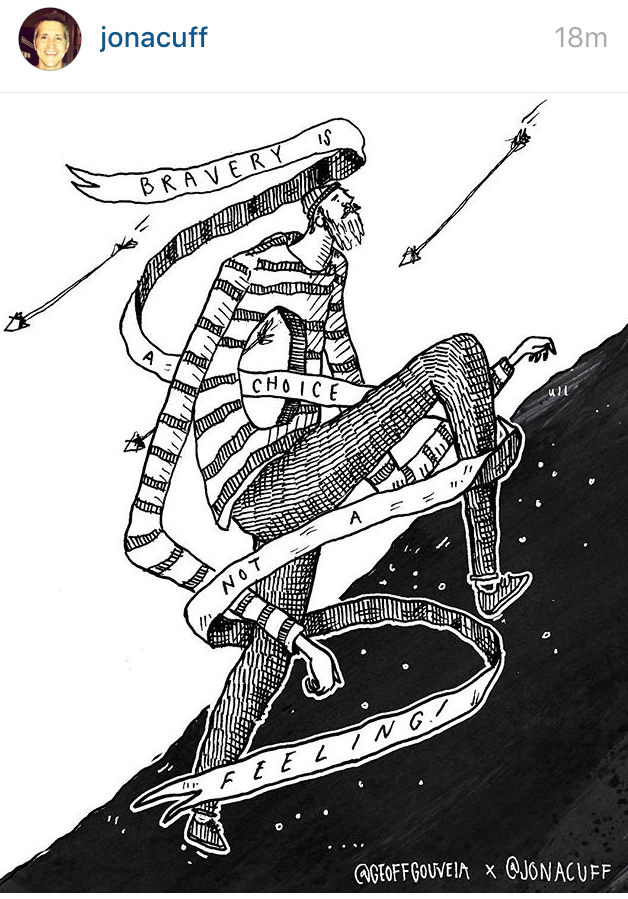
illustration by Geoff Gouveia for Jon Acuff
The realization? A switch in tactics.
Instead of preparing one piece at a time, I switched to drawing with ink on sheets of paper. At the beginning of each class I took out 3 sheets of paper and the pen and ink (think of a quill to dip into the ink, fancy) and proceeded to draw for the entire hour and a half.
Little did I know then that I was tapping into a technique that Keith Simonton, Phd. explores in his 1997 research paper Creative Productivity. Unknowingly, I stumbled into accessing my potential as an artist using the same technique that important creative figures, from Mozart, Monet and Picasso to Einstein and Eminem, used to achieve greatness.
The technique and the extreme cliff note version of Simonton’s jargon profuse paper?
Make a lot of stuff.
Simonton argues that “one of the best predictors of success in science is the number of publications a young scientist makes before earning a doctoral degree.” Expounding upon this idea in his book Creativity in Science: Chance, Logic, Genius and Zeitgeist, Simonton proposes with his idea, the Equal Odds Rule, that the merit is not in the quality of the work but in the quantity produced. “The Equal Odds Rule says that the average publication of any particular scientist does not have any statistically different chance of having more of an impact than any other scientist’s average publication.” The difference? The more tickets bought, the higher chance of winning the lottery.
Researchers from both the Psychology and Neurology departments at the University of New Mexico sought to replicate this idea in a recent 2015 study. 246 subjects were given abstract objects to look at and told come up with as many things they resembled under an allotted amount of time. “Subjects who produced more descriptions of abstract visual designs produced more creative descriptions of the designs as measured by judges who were blind to subject demographics.”
The Equal Odds Rule is important because it levels the playing field. It destroys the idea of genius. It does not, however, say that making equates to greatness. The implied aspect of creating is the ability to progress in production. Those who produce more, learn more. As their production improves so too does the quality. By the end of the production their pieces or works are the best because they’ve put in the work.
How does this play out in real life?
Einstein produced 248 publications during his lifetime. As a result, he earned the right to be celebrated as one of the most important figures in the realm of modern physics. Instead of relying on his genius to churn out a few great papers, he kept creating until he became great.
Let’s look at hip-hop. (Yes I jumped from physics to rap, any questions?)
Eminem has been featured in 505 (depending on the day of the week) tracks. He is also one of the highest selling artists in the 2000’s and one of the best selling artists of all time. Whether or not you like his music is irrelevant- his consistency and tenacity in creation is a whirlwind worth emulating. He certainly reaps the benefits of having put in the work now.
Not convinced that more works equals mastery?
Mozart created over 626 pieces of music before dying at the age of 35. I did the math: Every 16 days from the time he was six years old to his death he produced a new piece of music. Let that sink in.
Monet is attributed to over 2,500 pieces of art. If Monet were to start his artistic production from birth and continue until his deathbed at 84 years of age, he would have made 1 piece every 12 days.
The number of works Picasso has created varies from source to source, but many agree the number is over 20,000 drawings and paintings. Picasso lived to be 91- if he painted the day he was born up until the day he died he would have kept a pace of producing a work every 36 hours.
These are all masters at their craft and will subsequently be remembered for their important contributions in their given field. The amount of work they produced is staggering but comes with an important caveat:
They also produced the very worst.
Simonton warns that with the blessing of greatness comes a curse as “scientists who publish the most highly cited works also publish the most poorly cited works.”
It is hard to criticize Mozart, Monet and Einstein because of the length of time that has passed. Instead we have to focus on more recent triumphs. Check out Picasso and Eminem.
My brother Nolan recently went to LACMA and sent me this text.
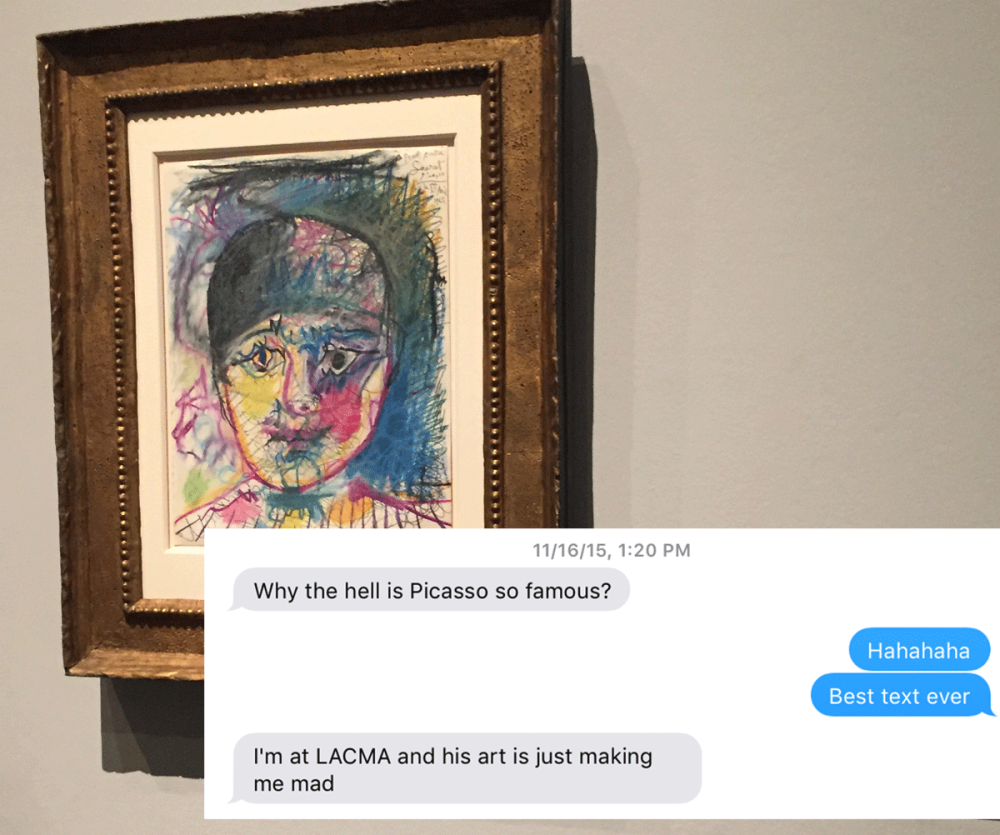
My brother Nolan's critique of Picasso
I’d have to agree. I think my mom has a drawing that I did back when I was 4 that looks better than Head of a Boy, 1965. Where’s my spot in the museum, LACMA?
Back to Eminem- the masterpiece that is Recovery comes on the heels of his worst album, Relapse. Check out his own lyrics:
“And to the fans, I’ll never let you down again, I’m back
I promise to never go back on that promise, in fact
Let’s be honest, that last Relapse CD was ‘ehhh’
Perhaps I ran them accents into the ground
Relax, I ain’t going back to that now”
And finally let’s point the marks back at me.
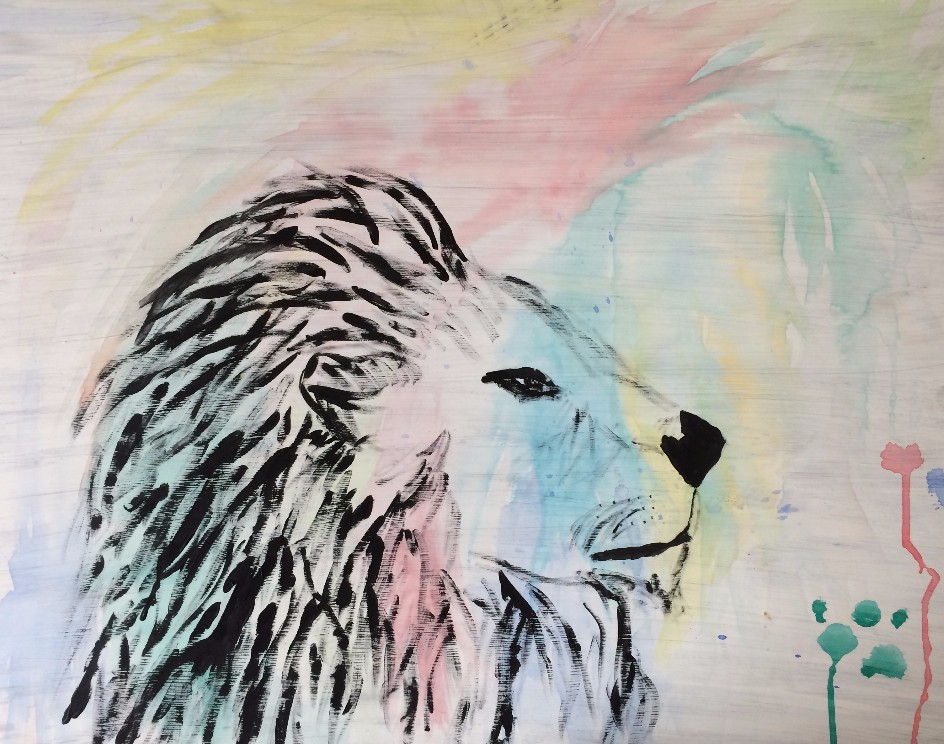
One of my first paintings...
Above is a photo of painting I did in 2010 for my then-girlfriend and now wife. It was still hanging in our bedroom until about 8 weeks ago. I finally snapped it in half after taking this photo. What can I say? At least it’s cooler than Head of a Boy.
This above picture should prove that I haven’t reached my full potential but I do know this: I’m on the right track.
I’ve noticed that I’ve progressed more than my peers because of drive and commitment as opposed to raw talent.
I don’t believe I was born with the talents to draw.
But that doesn’t mean I don’t have the confidence to become something great in this field. Why? Because I was born with the ability to weather the storm and to produce something every single day.
Simonton’s Equal Odds Rule is a bittersweet pill. Greatness is a number, not an inherent character trait. Greatness also has pitfalls on its path. Simonton’s rule should prepare you for the onslaught of absolute garbage to come from your fingertips. And that’s ok.
So get out there. Make a lot of stuff.
This originally appeared in my weekly newsletter.