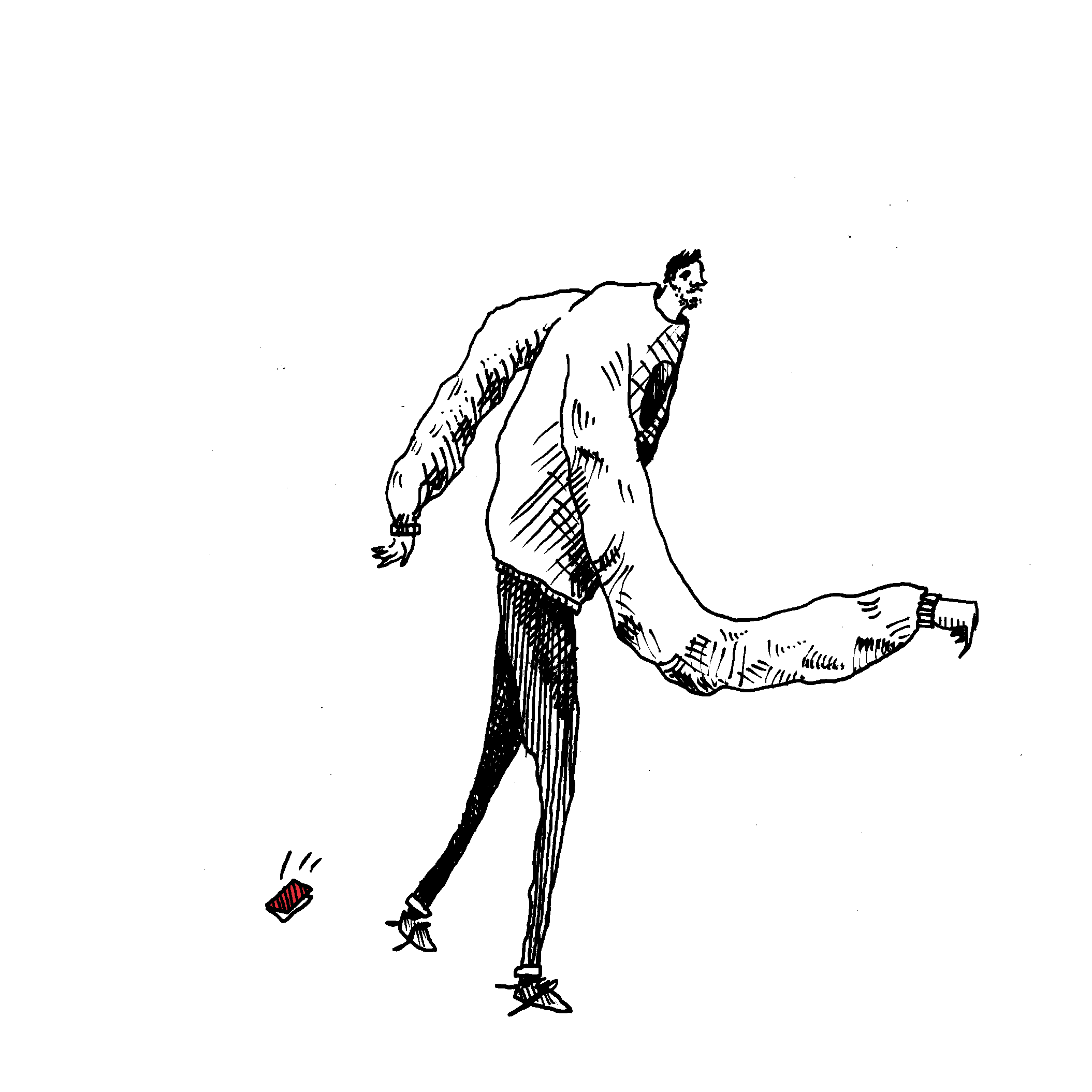
illustration by Geoff Gouveia
The line at the shop was out the door. With each new customer, the shots of espresso hissed into their new homes in to-go cups. The chill December air flooded inside. Outside the shop dazzled lights lit up for the Christmas festivities in the town. This ritual drew large crowds; crowds that swelled around the doors and asked for hot chocolates and coffees and spilled both on the floor. After watching the lights, the crowds were eager to become customers of liquid heat.
Nighttime provided the chance to watch the customers. Only the morning shift had the reciprocation of contact. At night, while pulling the shots of espresso and the stocking of the cups, I’d watch the people. Most were talking and there would be smiles. Others would stand as far apart as they could to signify an issue occurring in their lives- they ordered with terse voices and curt sentences. Still others came with their kids and their kids’ kids and those kids’ friends: too many kids and too many hot chocolates to serve. The ones in the line I noticed easiest were the ones alone. They spent the moment on their phone, huddled over the soft glow. After a scan of the line, I continued from right window to middle trashcan to the bar on the left.
Over on the left bar we limited the amount of contact one could have with the sugar packets and chocolate powder. We did this to combat the making of homeless hot chocolate during the winter. The drop in temperature inversely related to the homeless population buzzing around. The homeless who came in every day asked for hot water or a chance to use the bathroom. We granted these small requests to alleviate their status for a few moments. We had to watch the ones who asked for hot water, though. Not that we minded giving the easy beverage: we watched what they did with it afterwards.
The problem individuals walked the hot water over to the bar and created a mixed concoction of sugar, vanilla and chocolate. The ingredients they left made a large mess. The paying customers complained about the stickiness. It was a real hassle, but I understood why the homeless wanted a drink like that. It wasn’t the norm and they could take a small step towards dignity in drinking a pseudo-seasonal beverage. When I saw individuals making the homeless hot chocolate, I started my walk from behind the bar to halt their efforts. The chocolate smelled like the cheap coco mix I spilled on my shirt as a kid. Tears streamed then but now nothing comes to my eyes. I fulfilled my role as a barista to keep the shop clean.
We, the baristas, enjoyed the presence of the homeless but hated the awkward conversations they created. Being one of the only males on staff, it was my duty to pat the homeless man on the shoulder who had fallen asleep on the table. I wondered where the individual would go and if he would ever sleep more than 20 minutes at a time. The regulars, the homeless we knew by name, had their quirks that came with a counter balanced demon. Jerry laughed with a heavy wheezing laugh, but he was too loud and talked to no one in particular. We used to give the homeless our leftovers from the bake case but then Harry hit Robb over a cheese Danish. Big Joe was pleasant, gracious for the smallest items but, like Jerry, ranted about a lost love or a conversation he had years back. My favorite was Carl because he told me once he used to draw. He told me when I put a sleeve on his hot water, sliding it over the bar and our fingertips touched for a second.
Carl's demon was the scratch. A fidgeting nervous neck twitch that took precedent over the pen. I gave him a small red notebook, the ones with 40 small vanilla pages. I asked him about the drawings, looking up from my trash runs to watch him scribble and then scratch. The red notebook creased in his back pocket, hours of sitting in the same clothes gave no rest to the cover. I winced when I kicked him out for using the tables when he didn’t order anything.
Tonight, a sea of people swirled around the tables like kelp, tangled nearby. The lone bystanders were glowing iPhone driftwood, drifting apart from the buzzing crowd. One man in particular caught my eye; I had recognized him but knew not why.
He had white hair that hung neat, combed to the side and swooped across the back. It contrasted against his black windbreaker. He check the time with his glowing hand, a mannerism befitting the younger generation’s loners around him. Shifting his eyes from the bake case, to the register and to the bar, we made brief eye contact and I smiled and he did not. The line shuffled close. He ordered his drink. I heard the call for the drink and saw him walk in deliberate short steps towards the pickup area. With a heavy sigh and tired eyes, he leaned over the counter and said, “Hey, where’s Carl?”
Baggy pants and a grey sweater with a brown stain and a red notebook come to mind (in that order), “The homeless guy?”
“Yeah. Sure. Have you seen him lately?”
And that’s when I began to worry. Two weeks ago he snorted a packet of sweet and low off the table. He dropped his red notebook and I grabbed it off the floor and pushed into his chest and out the door. The next day, Carl came back and smacked a lady on rear end. We eased her worries with a free drink and shook our heads as Carl limped past the furthest left window. Since then, the shop hadn’t had an episode. We also hadn’t seen Carl, either. I was nervous to ask. I wasn’t sure what Carl had done to the man. As an employee I wanted to hear the man, as a human I wanted to protect Carl.
I lowered my voice and tilted my head to the side with eyes in an apologetic stance. “Look, sir, if you have a problem with him, I’ll be sure to take care of it later.” The man closed his eyes with another sigh and opened his jacket. He tilted his head towards his interior breast pocket.
Raising his chin up with eyes at the ceiling, I remembered where I had seen his face before. Only it wasn’t his face I’d seen before. He pulled out an envelope.
“Would you mind giving this to him when you see him next? It’s been a bit. Thanks.”
After the weak request, he laid the envelope on the counter. He turned and ran his hand through his hair, back and forth and walked towards the door. I grabbed the drink I just made in my hand to run after him. He disappeared into the crowd. The warm beverage in my right hand began to burn. I bumped into a festival bystander and dropped the beverage on the ground near the planter. The contents went into the potted plants. On my hands and knees with the towel from my apron, a tattered piece of red reflected the holiday lights. I dug back through the plants, a small worn out red notebook now covered in coffee. I wiped it on my apron and pocketed it.
When I walked back into the shop, the rush of cold bitter air swept my back. It fought against the harsh sound of the crowd. The notebook felt warm against my thigh, nestled right next to my keys. With each step the keys slipped against each other and jangled like a metallic metronome. My feet brought me back to the espresso machine and I eyed the card on the counter. Around me the crowd roared and my manager motioned with a large sweeping hand to get back in place. I slowed my pace and read the top of the card.
Handwritten in simple black ballpoint pen were the four words: To Carl, Love Dad.
Thank you for reading the story. If you have a moment, please consider reading another.
Jonathan L
June 27, 2015 at 11:55 am
Touching. I was immersed into this world and enjoyed the perspectives and descriptions of these people. I’m left wanting to know what happened, even though we don’t always get that luxury.
Geoff Gouveia
June 30, 2015 at 7:31 am
Thank you Jonathan! Sometimes that is the beauty of it…the ending is in our heads 🙂
McKay
June 29, 2015 at 11:06 am
Loved this one. Your descriptions cast vivid images in my mind. Well done. Curious to see what happened next.
Geoff Gouveia
June 30, 2015 at 7:31 am
McKay-
Thank you! I appreciate the kind words. I’m stoked I was able to paint a picture in your mind that left you asking for more. GG